
Prepaid phone plans have become a popular choice for people looking to save money and avoid long-term contracts. Their simple pricing and flexibility make them appealing, especially for budget-conscious users. However, the advertised monthly price doesn’t always reflect the true cost of service.
Many prepaid plans include extra fees or service limitations that can increase your overall expenses or affect your experience.
Understanding these hidden costs before you sign up can help you choose a plan that genuinely offers the best value.
Why the Advertised Price Isn’t Always the Final Price
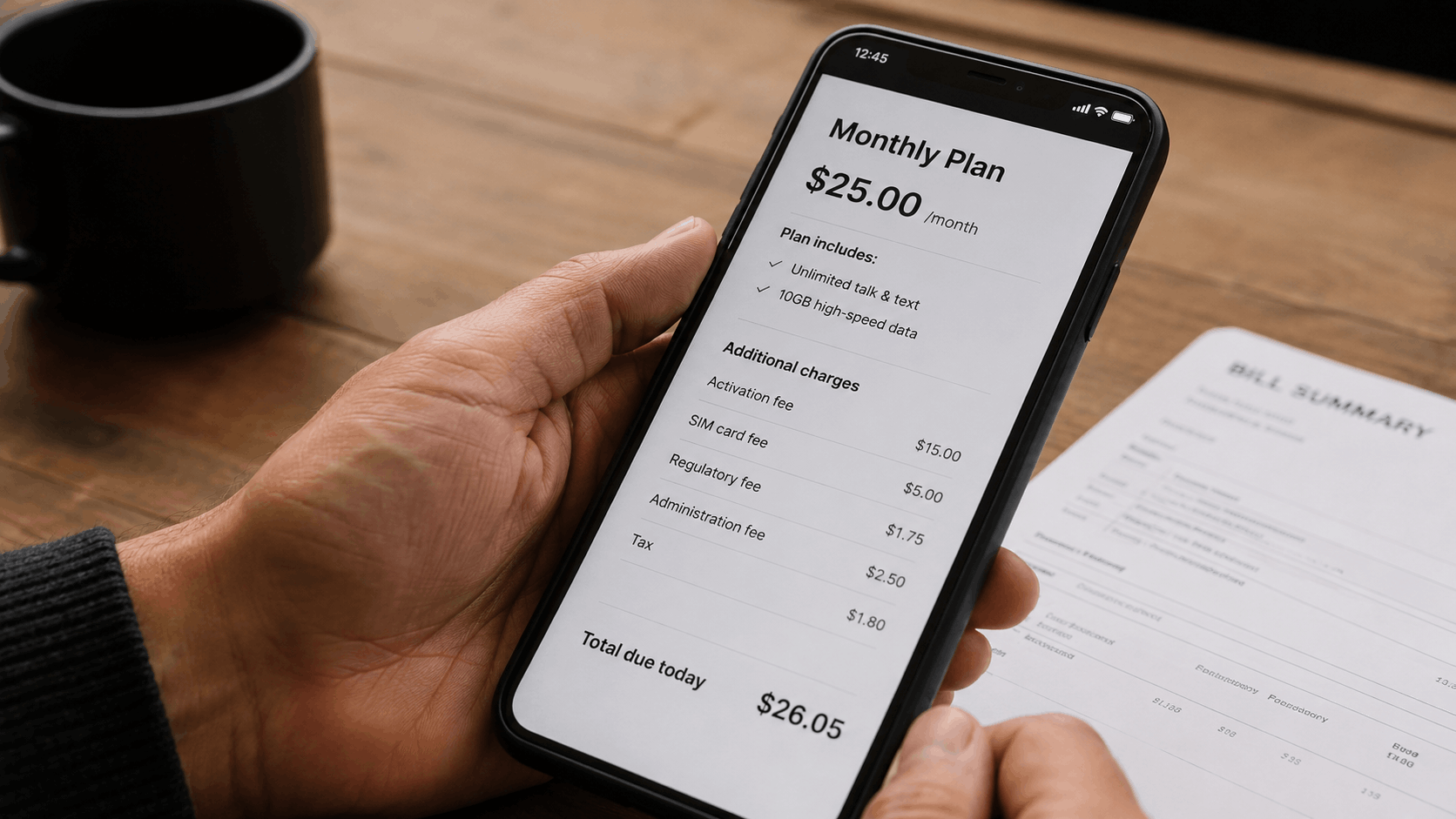
Most prepaid carriers promote an attractive monthly rate, but additional charges may appear during activation or checkout. These extra costs aren’t always obvious in advertisements, making it easy to underestimate what you’ll actually pay.
Looking beyond the monthly price allows you to compare plans more accurately and avoid unexpected expenses.
Activation and SIM Card Fees
One of the most common hidden costs is the combination of activation fees and SIM card charges.
Some providers require customers to purchase a SIM card separately, while others charge a one-time activation fee to begin service. Even if the monthly plan appears inexpensive, these upfront costs can significantly increase your initial payment.
Before purchasing a prepaid plan, check whether:
- A SIM card is included
- Activation is free or requires a fee
- There are any additional setup charges
A plan with slightly higher monthly pricing may actually be cheaper overall if it waives these initial fees.
“Free” Phones May Not Really Be Free
Some prepaid carriers advertise free smartphones to attract new customers. While these promotions sound appealing, the phone’s cost is often recovered through higher monthly service charges or other long-term commitments.
Instead of focusing only on the word “free,” compare the total amount you’ll spend over time. In many cases, buying an unlocked phone separately may provide better overall value.
Taxes and Regulatory Fees Can Add Up
Prepaid service doesn’t necessarily mean an all-inclusive price.
Depending on the provider, taxes and regulatory fees may be added to your bill, increasing your total monthly cost. Some carriers advertise prices that already include these fees, while others calculate them during checkout.
Always verify whether the advertised price includes:
- Sales tax
- Regulatory fees
- Other mandatory government charges
Knowing the full monthly cost makes comparing plans much easier.
Watch for Data Overage Charges and Speed Throttling
Low-priced prepaid plans often come with strict data limits.
Once you exceed your high-speed data allowance, your provider may:
- Charge additional data overage fees, or
- Reduce your internet speed through throttling.
If you only use a small amount of data each month, paying for an expensive unlimited plan may not make financial sense. On the other hand, heavy data users should carefully review each plan’s data policies before signing up.
Deprioritized Data Can Affect Performance
Many prepaid plans, especially those offered by Mobile Virtual Network Operators (MVNOs), use deprioritized data.
This means that during periods of heavy network congestion, prepaid customers may experience slower data speeds than customers on higher-priority plans.
While this may not be noticeable during normal usage, it can impact activities such as:
- HD video streaming
- Video conferencing
- Online gaming
- Downloading large files
- Browsing during busy hours
For users who depend on consistently fast mobile data, this is an important factor to consider.
Customer Support May Be More Limited
One reason prepaid plans cost less is that providers often reduce customer support options.
Instead of offering full-service retail locations, assistance may be limited to:
- Online chat
- Phone support
- Mobile apps
- Self-service websites
If you prefer in-person assistance or frequently help family members with their phones, paying a little more for access to retail stores may be worthwhile.
How to Compare Prepaid Plans the Smart Way
Instead of choosing the lowest advertised price, compare the complete cost of ownership.
Before selecting a prepaid plan, ask yourself:
- Are there activation fees?
- Is the SIM card included?
- Does the advertised price include taxes?
- What happens after I reach my data limit?
- Is the plan subject to deprioritized data?
- What customer support options are available?
- Is the “free” phone actually a good long-term deal?
Considering these questions can help you avoid surprises and select a plan that better fits your needs.
Use these simple strategies when shopping for a prepaid plan:
- Read the full pricing details before purchasing.
- Compare total first-month costs instead of only monthly prices.
- Confirm whether taxes and regulatory fees are included.
- Understand the provider’s data usage policies.
- Check customer support options before switching carriers.
- Calculate the long-term cost of promotional phone offers.
Taking a few extra minutes to research can save money over the life of your plan.
Frequently Asked Questions
The most common hidden costs include activation fees, SIM card charges, taxes, regulatory fees, data overage charges, and service limitations like deprioritized data.
Do all prepaid plans charge activation fees?
No. Some providers waive activation fees, while others require a one-time payment when starting service.
Are taxes included in prepaid plan prices?
Not always. Some carriers include taxes and fees in their advertised prices, while others add them during checkout.
What is deprioritized data?
Deprioritized data means your connection may slow down during periods of network congestion because customers on higher-priority plans receive preference.
Can prepaid plans charge for extra data?
Some providers charge overage fees after you exceed your data allowance, while others simply reduce your data speeds.
Are free phones actually free?
Usually not. The cost is often recovered through higher monthly service charges or promotional requirements.
Is prepaid customer support different from postpaid support?
Many prepaid providers offer fewer in-store support options and rely primarily on online or phone-based customer service.
