
Switching to a no-contract phone plan is one of the easiest ways to lower your monthly wireless bill while gaining greater flexibility. Instead of being tied to lengthy contracts and expensive device financing, you can choose a plan that better fits your budget and usage habits.
However, finding the cheapest plan isn’t always the smartest move. Before making the switch, it’s important to understand your current phone agreement, compare available networks, and choose a provider that meets your everyday needs.
With the right strategy, you can save money without sacrificing reliable service.
Why Switch to a No-Contract Phone Plan?
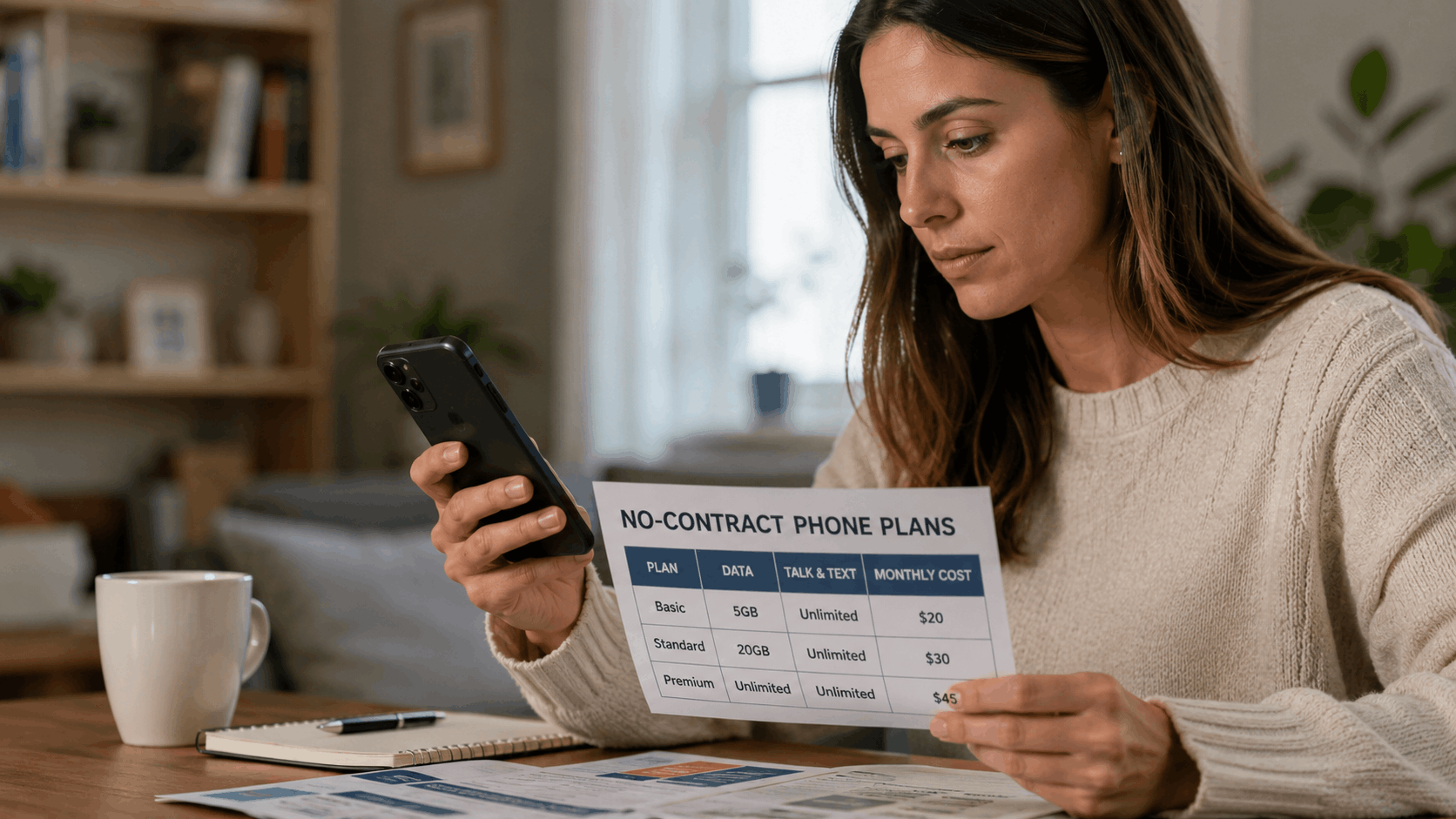
No-contract phone plans have become increasingly popular because they offer more freedom than traditional carrier agreements. Rather than committing to a long-term contract, you can switch providers whenever you find a better option.
Many consumers also discover that no-contract plans provide substantial monthly savings, especially when paired with an unlocked phone.
Some of the biggest advantages include:
- Lower monthly costs
- Greater flexibility to change carriers
- No long-term service commitments
- More control over your wireless expenses
Pay Off Your Current Phone First
Before changing carriers, find out whether your phone is fully paid off.
Owning your device outright gives you complete freedom to move to another provider without worrying about financing obligations or carrier restrictions.
If you’re still making monthly device payments, compare the remaining balance with the potential savings from switching. Paying off your phone sooner may be worthwhile if it significantly reduces your monthly bill.
Don’t Fall for “Free” Phone Promotions
Many major carriers advertise free smartphones, but these promotions often come with hidden costs.
Instead of paying for the phone upfront, the cost is typically built into higher monthly service fees over a long period. While the phone may appear free, you’re often paying for it through your wireless plan.
Before accepting a promotional offer, calculate the total amount you’ll spend throughout the agreement rather than focusing only on the advertised device price.
Check for Contract Buyout Offers
If you’re locked into a contract, don’t assume you have to wait until it ends.
Some carriers offer contract buyout promotions that help cover the remaining balance on your current agreement. If you qualify, these offers can make switching much more affordable.
Always review the eligibility requirements and reimbursement limits before making your decision.
Choose the Right MVNO
Many affordable no-contract plans are offered by Mobile Virtual Network Operators (MVNOs). These providers use the networks of major carriers like Verizon, AT&T, and T-Mobile while offering lower monthly prices.
Since multiple MVNOs may use the same underlying network, comparing plans can help you find better pricing without sacrificing coverage.
Research Network Coverage
Coverage should always be one of your top priorities.
Before selecting a provider, verify which major network the MVNO uses and confirm that it offers strong service where you live, work, and travel.
If you spend most of your time in cities, one network may perform perfectly well. Rural travelers, however, may need a provider with stronger nationwide coverage.
Choose a Plan Based on Your Data Usage
Unlimited data isn’t always the best value.
Take a look at your recent mobile data usage and ask yourself:
- Do you regularly use Wi-Fi?
- How much cellular data do you actually consume each month?
- Are you paying for more data than you ever use?
Choosing a plan that matches your actual usage helps eliminate unnecessary monthly costs.
Understand Potential Data Prioritization
Lower prices sometimes come with trade-offs.
Because MVNOs share networks with larger carriers, their customers may receive lower network priority during periods of heavy congestion. This can result in temporarily slower data speeds when the network is busy.
For many users, this isn’t a significant issue, but it’s worth considering if you depend on consistently fast mobile data.
Buy Your Phone Instead of Financing It
Buying your phone directly from the manufacturer or a trusted retailer can provide long-term savings.
Benefits include:
- No carrier lock-in
- Greater flexibility to switch providers
- No monthly device financing payments
- Access to more prepaid and no-contract plans
Although purchasing a phone upfront requires a larger initial investment, it often lowers your overall wireless costs over time.
Save More with Refurbished Phones
A refurbished smartphone can deliver outstanding value.
Professionally refurbished devices are often inspected, tested, and restored to excellent working condition while costing significantly less than brand-new models.
If you’re looking to maximize savings without sacrificing quality, refurbished phones are worth considering.
Compare Plans Before You Switch
Don’t choose the first plan you find.
Take time to compare several providers by looking at:
- Monthly pricing
- Included data
- Network coverage
- Additional fees
- Overall value
Independent comparison tools can help you evaluate available options and identify the plan that best fits your budget.
Tips for Getting the Most Savings
To maximize the benefits of switching to a no-contract phone plan:
- Pay off your current phone whenever possible.
- Avoid expensive “free” phone promotions.
- Choose a plan based on your real data usage.
- Research network coverage before switching.
- Compare multiple MVNO providers.
- Purchase an unlocked phone if possible.
- Consider buying a refurbished device to reduce upfront costs.
Following these simple strategies can significantly reduce your monthly phone bill while giving you greater flexibility in the future.
Frequently Asked Questions
Are no-contract phone plans cheaper?
In many cases, yes. They typically offer lower monthly costs because they don’t include long-term contracts or expensive phone financing.
What is an MVNO?
An MVNO (Mobile Virtual Network Operator) provides wireless service by using the networks of larger carriers while offering its own pricing and plans.
Should I pay off my phone before switching?
Yes. Owning your phone outright makes switching carriers much easier and eliminates remaining financing obligations.
Can I keep my current phone?
If your phone is unlocked and compatible with your new carrier’s network, you can usually continue using it.
Are refurbished phones reliable?
Professionally refurbished phones can provide excellent performance while costing substantially less than new devices.
Will I experience slower speeds with an MVNO?
Possibly. During times of heavy network congestion, some MVNO customers may experience reduced data speeds because major carrier customers often receive higher network priority.
How do I choose the best no-contract plan?
Compare your monthly data usage, verify network coverage in your area, review pricing from multiple providers, and select the plan that offers the best overall value.
