
A reliable phone is essential for staying connected to work, healthcare, school, and emergency services. However, phone service can be expensive for many low-income households in the United States.
The federal Lifeline program helps eligible individuals reduce communication costs. Depending on the provider and location, qualified applicants may receive discounted service or even a free smartphone.
If you’re looking for a free government phone stand near you, this guide explains where to find enrollment locations, which providers operate them, and what documents you’ll need to apply.
What Is the Lifeline Program?
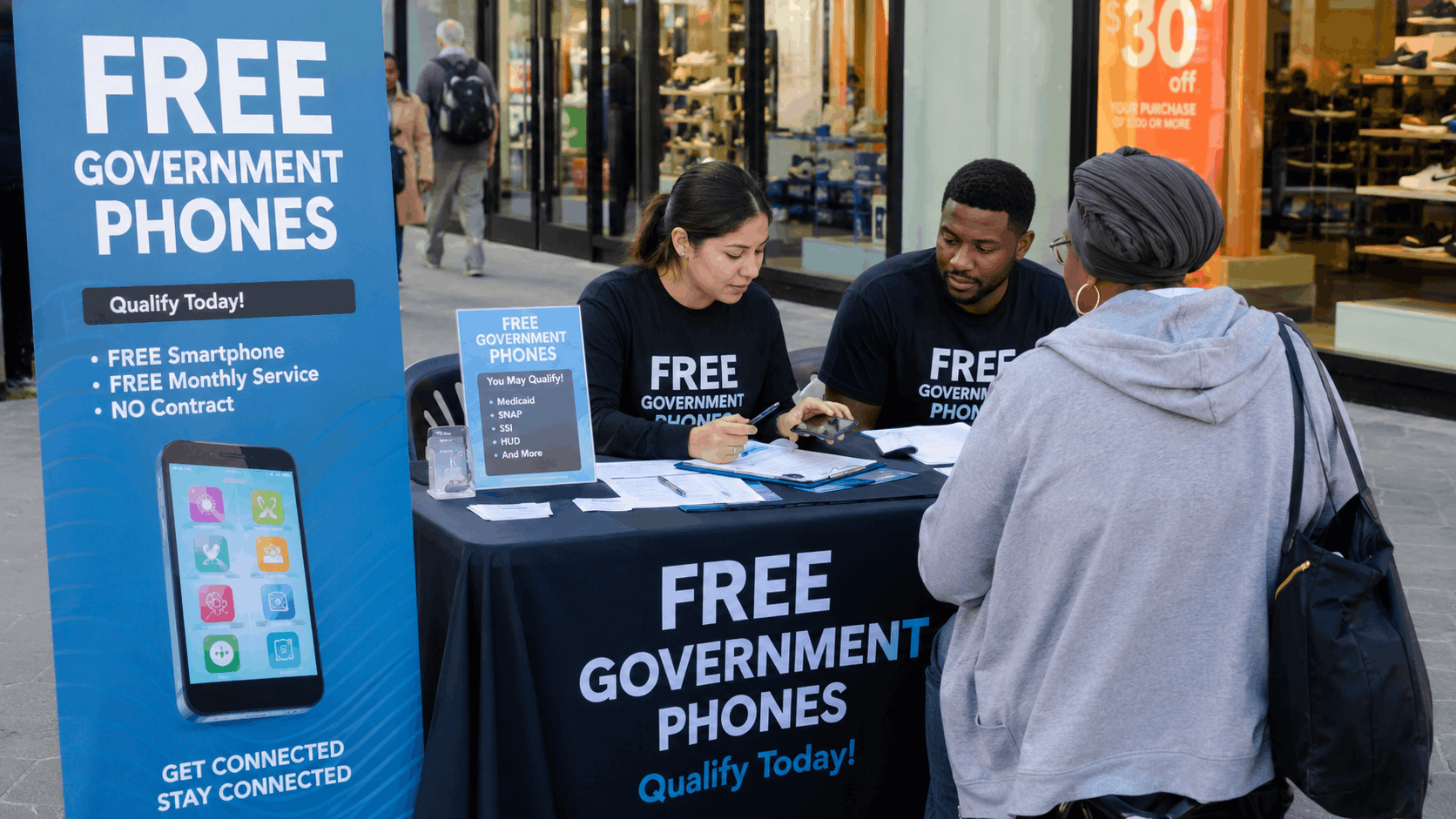
The Lifeline Program is a federal benefit administered by the Federal Communications Commission (FCC). It helps qualifying low-income consumers access affordable phone and internet services.
Depending on the provider and your location, Lifeline benefits may include:
- Free or discounted monthly wireless service
- Unlimited or limited talk and text plans
- Monthly mobile data allowances
- Discounted smartphones or free devices during promotional periods
Availability varies by state and by wireless carrier.
Where Can You Find a Free Government Phone Stand Near You?
Many Lifeline providers operate temporary enrollment booths or stands in public areas where eligible residents can apply in person.
Common locations include:
- Shopping centers and malls
- Grocery store parking lots
- Community events and fairs
- Public assistance offices
- Community centers
- Libraries
- Local outreach events
These locations allow applicants to verify eligibility, submit documents, and often receive approval on-site.
1. Use the Lifeline Companies Near Me Tool
The fastest way to locate participating providers is through the official Lifeline provider search tool.
Simply enter your ZIP code or state to see companies currently serving your area. Once you identify available providers, visit their websites or contact customer support to ask about local enrollment events and phone stands.
2. Contact Major Lifeline Providers
Several nationwide providers frequently host enrollment events and temporary application booths.
Popular Lifeline providers include:
- Assurance Wireless
- TruConnect
- StandUp Wireless
- Life Wireless
- Gen Mobile
- SafeLink Wireless
- Q Link Wireless
- Access Wireless
- enTouch Wireless
Because stand locations change regularly, contacting providers directly is often the most reliable way to find nearby enrollment opportunities.
3. Search for Local Enrollment Events
Many providers advertise temporary enrollment locations through:
- Official websites
- Facebook pages
- Community event listings
- Local outreach organizations
Useful search phrases include:
- Free government phone stand near me
- Lifeline enrollment event near me
- Free government phone booth near me
- Lifeline phone provider event
Recent event listings often provide exact dates, times, and locations.
4. Visit Community Assistance Centers
Organizations that help residents access public benefits frequently work with Lifeline providers.
You can check with:
- Community action agencies
- Social service offices
- Public housing authorities
- Nonprofit assistance organizations
- Local libraries
Staff members may be able to direct you to upcoming enrollment events in your area.
5. Check State-Specific Providers
Available providers differ by state. Some common examples include:
California
- Assurance Wireless
- TruConnect
Texas
- Life Wireless
- StandUp Wireless
Florida
- SafeLink Wireless
- Assurance Wireless
New York
- Q Link Wireless
- TruConnect
Illinois
- enTouch Wireless
- StandUp Wireless
Georgia
- Access Wireless
- Life Wireless
Ohio
- SafeLink Wireless
- TruConnect
Provider availability changes over time, so always verify current service coverage before applying.
Who Qualifies for a Free Government Phone?
You may qualify if your household income falls within Lifeline income guidelines or if you participate in an eligible government assistance program.
Common qualifying programs include:
- Medicaid
- SNAP (Supplemental Nutrition Assistance Program)
- Supplemental Security Income (SSI)
- Federal Public Housing Assistance (FPHA)
- Veterans Pension and Survivors Benefit
- Certain Tribal assistance programs
Eligibility requirements can vary, and documentation is required during the application process.
What Documents Should You Bring?
To speed up approval, bring:
Proof of Identity
- Driver’s license
- State ID card
- Passport
- Other government-issued identification
Proof of Program Participation
- Medicaid card
- SNAP award letter
- SSI documentation
- Benefit verification letter
Proof of Income
- Recent pay stubs
- Tax returns
- Social Security benefits statement
Proof of Address
- Utility bill
- Lease agreement
- Government correspondence
Having all required documents available can help prevent delays and reduce the need for follow-up verification.
Tips Before Visiting a Phone Stand
Before traveling to an enrollment location:
- Confirm that the event is still active.
- Verify operating hours.
- Ask which documents are required.
- Check whether phones are available immediately or shipped later.
- Confirm coverage in your area.
A quick phone call beforehand can save time and ensure a smoother application process.
Finding a free government phone stand near you is often easier than many people realize. Lifeline providers regularly host enrollment events in shopping centers, community facilities, and public assistance offices across the country.
By confirming your eligibility, gathering the necessary documents, and contacting local providers, you can improve your chances of receiving affordable phone service and staying connected to work, healthcare, education, and emergency resources.
